
When frets get worn down a number of playing issues arise frets may start to buzz or choke and playing becomes more difficult, sometimes a fret dress, will address the issue but when they’ve gone too far its time for a re fret, this can be full or partial it really depends on the type of ware, sometimes it can be a loose fret causing the problem, Re Frets can be time consuming depending on the type of fretboard, the work involved in a bound and lacquered neck far exceeds the work involved in a rosewood fretboard, the best way to preserve your frets is to change your strings regularly, and to use a good quality string, the reason for this is that most frets are made of cupronickel a mixture of copper and nickel, strings are made of steel coated with nickel, once the nickel has worn off the string it exposes the harder steel which in turn wears the softer cupronickel at a faster rate, and remember to keep the your rosewood fretboards oiled to prevent any shrinking of the wood.
Heres a link to Paul Hostetters site which shows the difference in fret materials and sizes. Fret Chart
Paul Hostetter is a professional luthier who works in California.
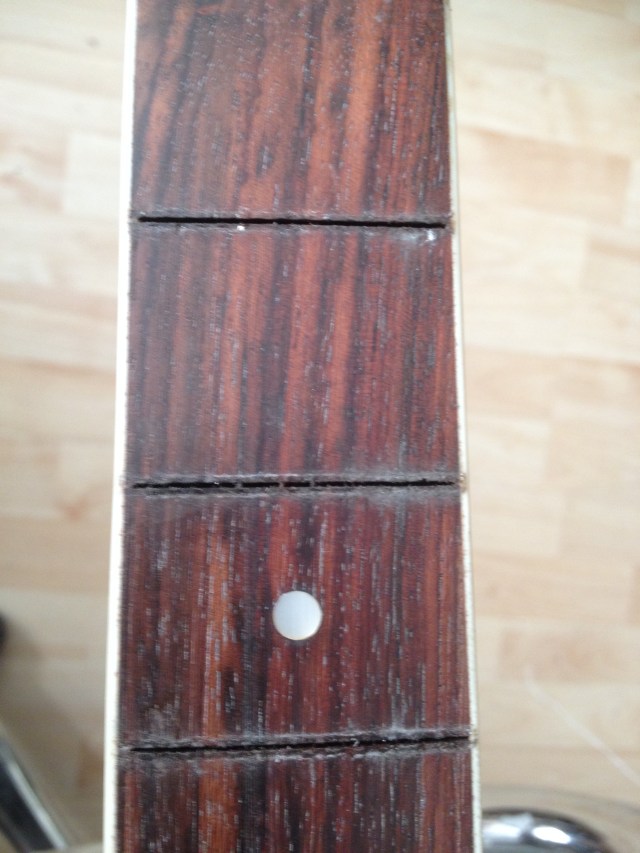
Here is a re fret that I did on a bound rosewood fretboard, this one had been allowed to dry out and not been used for many years, I suspect that this guitar may have been in a loft (thats a No No) because of the rapid temperature changes which in turn causes rapid expansion and contraction, perfect for ruining a perfectly good guitar, or left in a dry hot room for years un played, either way the frets were up and down or falling out.
Figure 1:
Care has to be taken when removing the frets, as the barbs which hold them down can lift chunks from your fretboard, any large pieces that come out have to be re glued.
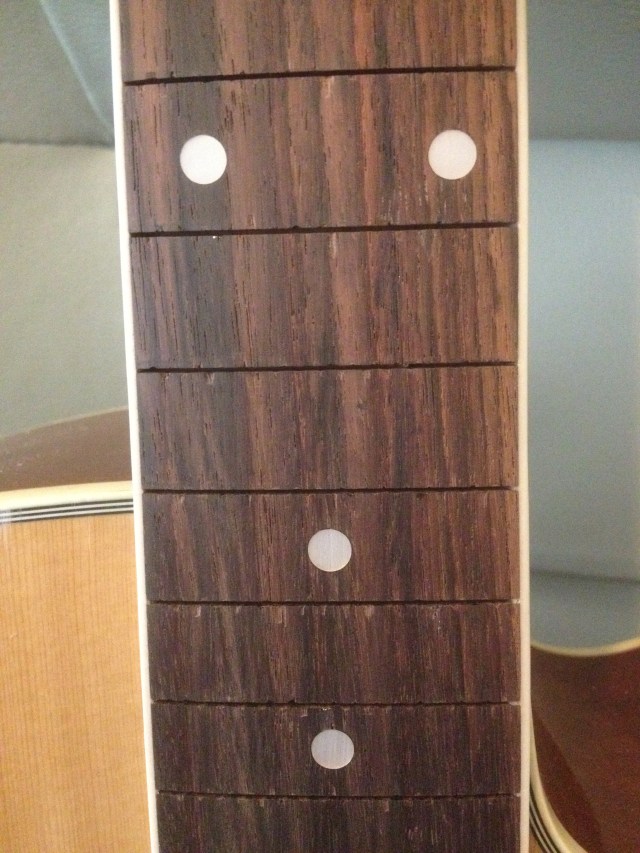
Figure 2:
After all the frets are removed and any break out pieces have been re glued, the neck is sanded using a fine grit paper the correct radius sanding block, (this can be an opportunity to change the radius slightly) then a fine fret saw is used to clean out the slots to remove any dust glue and debris, this one had developed loose frets which in turn had allowed dirt to accumulate underneath which helps to lift and lever the frets up until they popped out.
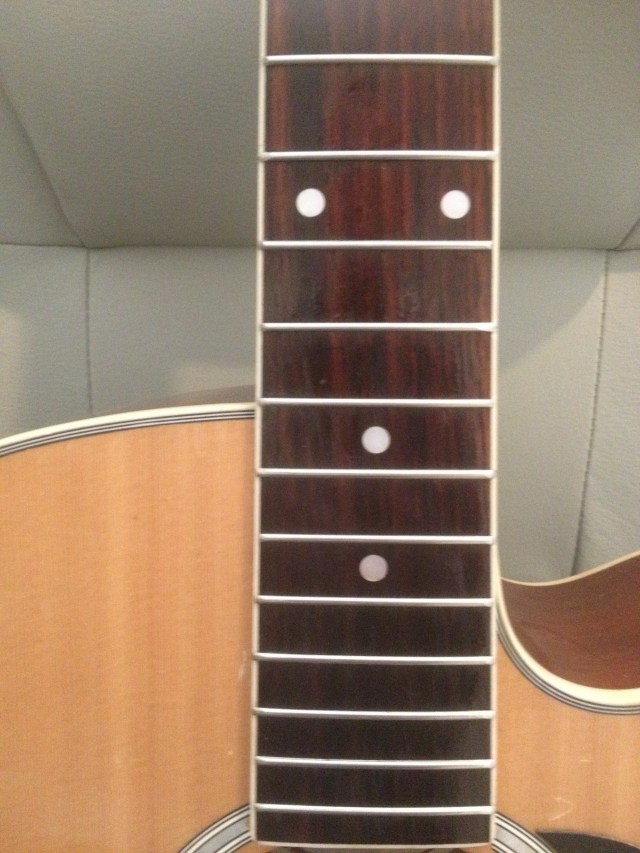
Figure 3:
New frets all level, and all playing like new, this guitar was unplayable prior to the re fret.
The cost of a re fret to a lacquered fingerboard (usually maple) is higher due to the re finishing work involved.
 Lucerne Guitars