
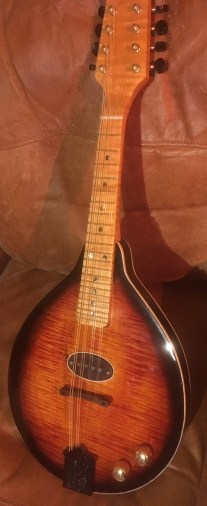
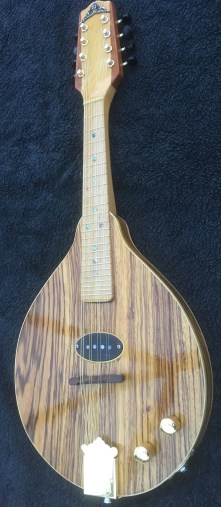
Left is the prototype of our Electric mandolins, and right is the Lucerne EM0 Zebrano the EM standing for Electric Mandolin, having relocated to Kent and being in the midst of a thriving folk scene we decided to make a solid bodied electric mandolin aimed at the festival players, who may be wanting to increase the volume and sustain without the associated problems of amplifying an acoustic instrument. The first step is to make a prototype to discover any faults within the new design, I say new design, I’m using a traditional shape based on the acoustic mandolin, but with a solid body and electrics.
Wood and Templates
I want the mandolin to resemble an acoustic so I plan for a sound hole shaped pickup and a traditional tailpiece and bridge. First I need to find some wood, so for the prototype I use an old scaffold board which is made of pine and been sitting in a garage for the last 30 years, not your top end tone wood but its age gives it a lovely ping when you give it a knock, for the actual mandolin I have a thick slab of Zebra Wood or “Zebrano”, thick pieces like this are hard to find and this has some age to it, it is very hard and very heavy, complete polar opposite to the scaff board, but perfect if you want bright chimes and sustain.
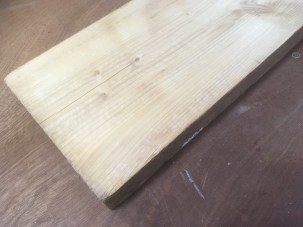
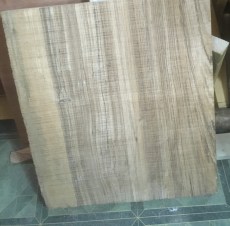
Scaffold, (Sitka, Spruce, Scotts pine) Zebrano (Microberlinia brazzavillensis)
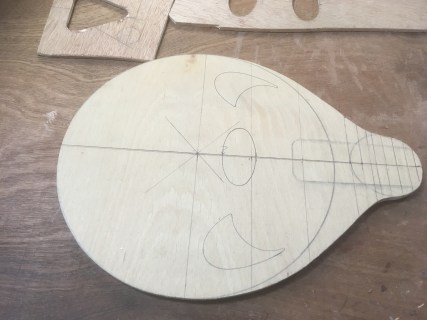
A piece of 12mm ply is used to make the first body template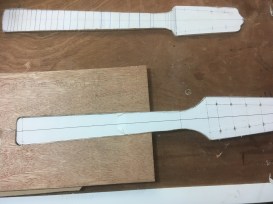
two neck templates are made, the first with a slightly smaller headstock, each neck has its own neck socket template, I decided to go 2mm wider with the second neck as we found the traditional size quite hard to use, (Probably because we are guitar players)
Building the Pickups
I had decided to build the pickup from scratch to resemble the shape of a sound hole, I’ve had great results with rosewood timber bobbins and decided that direct mounting them would be the way to go.

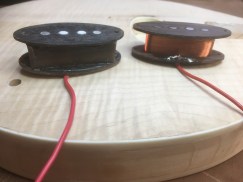
Alnico 5, 4 pole 5mm x 18mm magnets on rose wood bobbin, to the left the prototype which i encased in rosewood, to protect the coil when raised, to the right the zebrano, I’ve gone away from the wood case as when tested the pickup was fine and did not need raising, although springs or sponge could be added to make a rise and fall system, on the mk2 model I opted for more copper wind’s and a hotter pickup.


Both pickups are potted in bees’s wax, right you can see the aluminum plate which secures the pickup, the pickup hole has cream binding to match the edge of the mandolin.


Left prototype 6.29 dc line impedance right zebrano 7.04 this was achieved by adding an extra 2500 winds of 42 AWG copper wire,
Necks


Left the prototype is made of an off cut, of flame maple, I wouldn’t normally use such a beautiful piece on a prototype, however the build had gone so well and I had found some off cuts of flame maple veneer for the body top, I decided to give the prototype to my wife and turn it into something special. Right the Zebrano has a bone nut, Ashbury Tuners, and Blue Abalone fret marker dots. The wings of the head stock are made from Salvaged Brazilian Mahogany.
Bridge Position
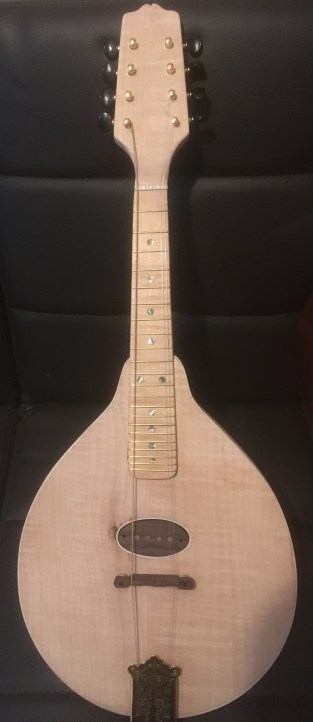
Both Mandolins are 14 inch scale to determine the perfect bridge position each instrument is strung and the bridge moved until the optimum position for intonation is achieved, then using the prototype bridge, the holes for the bridge pins are drilled using the bridge as a template.
Finishing


The prototype, requires a lot more processes than the Zebrano which relies on its own natural beauty, both are finished with cream binding, the Prototype is grain filled with Bismark Brown although it appears red here, after the vintage amber lacquer is applied it reverts to a natural tobacco colour.
Wiring


The prototype has the jack input situated on the strap button which meant taking the wire to the pickup cavity and back to the control cavity, I opted for a more simple aproach on the Zebrano with a barrel jack strait into the control cavity, both have 500K pots and 47uf capacitors, on the Zebrano I’ve gone industrial on the wiring with Gibson braided wire on the input and house hold grade copper on the earth just like the old Gibson basses. this configuration meant a larger cavity, but it also has space for another switch if I decide to put a neck pickup on at any point.
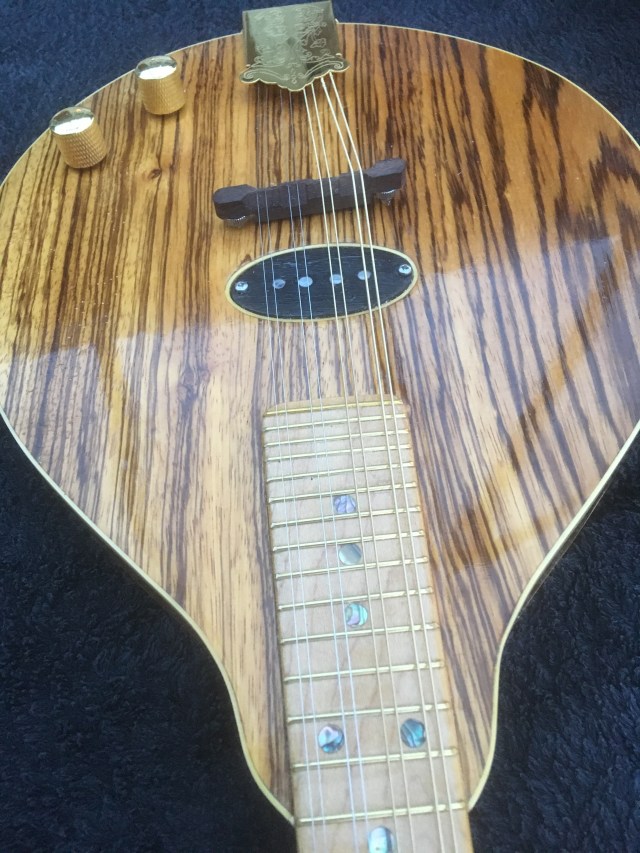
Brass frets gold furniture cream binding rosewood pickup and bridge, Brazilian mahogany and maple headstock with Ashbury tuners, all set this bespoke instrument off.
Q. What does it play like? ok I’m no mandolin player but I’ve picked a few up and felt them, and this one plays like butter straight off the bat, I didn’t need to level or dress any frets, the nut was perfect didn’t have to do any adjustments, its not often that happens but when it does you know its a good one.
Demo
Like I Said I’m no mandolin player, So I got Mandolin player Matt from “Rye Grass Union” who were competing in a Folk talent contest in Deal, to give her a little demo, he loved the low easy action although he found it a bit strange at first being an acoustic player.
Rye Grass won the competition.
 Lucerne Guitars