Building a tribute to Leo Fenders first version of the electric solid body guitar.
In 1949 the race was on to develop the worlds first solid body 100% electric guitar. The man who won was Leo Fender, Leo had been manufacturing guitar amplifiers for lap steel guitars and hollow bodied guitars since 1938, from his radio shop in California. The 49 prototype which has become known as the Snake Head because of its traditional headstock design, is generally accepted as the first electric guitar. It certainly was the first commercially successful electric guitar partly due to its simple design which lowered the production cost significantly, making the telecaster available to a much wider audience, and suddenly a whole new generation were able to learn guitar and so began the age of Rock and Roll.
Originally the Snake head had no name and was just called the prototype. This model was called the Esquire when it went into production, then it became the Broadcaster when a second pickup was added. Unfortunately Gretsch (a musical instrument company) had the name on its drum kits, so fender removed the Broadcaster name from its head stock and for a while the guitars were produced without any name. These models are now referred to as Nocaster’s, eventually Fender settled on the name Telecaster and the legend was born.
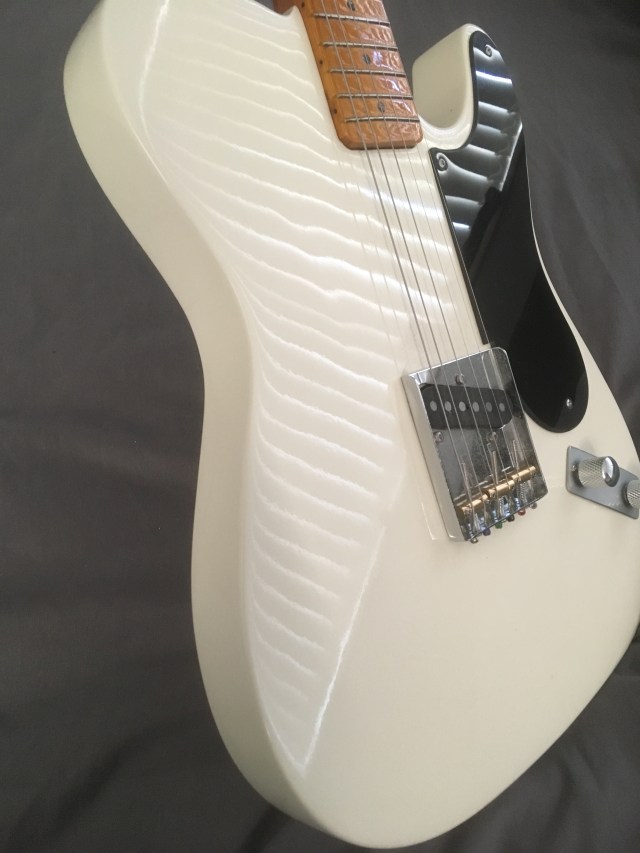
Lucerne 49 Snake Head Tribute, is just that a tribute to the design innovation and engineering which still leads the market today. We have made some alterations to the original 49 design in line with Fenders own refinements, we have added a Truss rod for added neck stability and fret marker dots along the top edge of the neck with enlarged fret marker dots for ease of playing.
Planning.


I had to go back to the drawing board quite literally with this one as I could not find any available plans or blue prints, I managed to find the details of the size of the head stock and drew this onto the telecaster neck plans, the cavity for the control panel was positioned using photographs of the original, I was however able to use a traditional Tele template to position the Pickup.
The Wood.


Left is the body blank it is a two piece Poplar or Tulip wood which is renowned for its tonal qualities and durability and has been used on many of the finest telecasters, the original was Pine, but was only intended as a prototype, nobody could imagine how successful that prototype would be.
On the right is a billet of Hard rock Canada Maple, from the same length of timber which I have made two other guitars from which both sound great, I’ve had both these pieces for a number of years waiting for the right project.
The Build


Above left, body and neck cavities have been routed and the holes drilled for the strings and rear ferrules, and its in the paint shop ready to be primed.
Above right, the neck has been shaped, radiused, frets slotted, dots are in and the frets have started to go down.


The pickup is wound, I’ve decided to make this one Hot so I’ve given it 10’000 winds of 42 awg copper and it registers over 8 on the dc Line resistance, the original would not have been quite so hot, the magnets are a tall 18mm ALNICO 5 just to add a bit more power.
Above right I am checking the neck pocket with the lacquer on to make sure we get a perfect fit.


Above left Paint done and the control plate is positioned, its made from aluminium just like the original,
the scratch plate has been hand cut from a two ply black acrylic again there are no templates or pre made scratch plates available for this model.
Above right. Before making guitars Leo Fender made lap steel guitars which is probably why he went with the three aside tuners from a lap steel guitar.
 Lucerne Guitars